You’re choosing between a few steam irons that look alike on paper but differ in how they handle steam, heat and upkeep. What separates these picks is mostly how much control you get over temperature and steam, and how much cleaning the iron asks of you. Each one below is judged only on what its listing says.
Best overall: Rowenta Focus Excel DW5280, for its high steam output and large number of steam holes spread across the soleplate.
Best for hands-off care: PurSteam SteamBurst+, for its self-cleaning feature and multiple auto shutoff timers.
Best for simple use: BLACK+DECKER Allure Professional, for its plain controls and its automatic cleaning system.
This guide is for anyone who irons regularly and wants a steam iron that fits their fabrics and their routine.
Quick Navigation
How We Picked
We compared 16 Amazon listings for steam irons. To earn a place, a listing had to state concrete facts such as its power rating, steam output, soleplate design, fabric settings, shutoff features or what comes in the box. Products were removed when their listings were vague or when they offered little beyond what stronger options already covered.
The reasoning behind this filter is simple. A listing that says “powerful steam” or “great results” gives you nothing to compare, while a listing that gives a wattage, a steam output in grams per minute or a count of soleplate holes lets you line up one iron against another. Facts like these are the only way to judge whether two irons will actually behave differently in your hands.
Some of the listings we set aside didn’t describe their features at all. A few gave only a product name and a model number, with no detail on steam, soleplate or safety features. We couldn’t tell what those irons did differently, so we couldn’t recommend them over the ones that did say.
Other listings had enough detail but repeated what a stronger model already offered. If two irons both list the same wattage, auto shutoff and anti-drip function, and one of them also gives a steam output, a soleplate description and fabric presets, the first one added little to the comparison and was dropped.
The Picks
The five picks above are the ones that held up best across the features that matter most in daily use, but they aren’t interchangeable. Start with what you iron most. If you mostly press cotton shirts and need speed, the steam output and soleplate coverage of the Rowenta Focus Excel DW5280 or the PurSteam SteamBurst+ will serve you well, since both list strong steam figures and fast heat-up times in their specs.
If you iron a mix of delicate fabrics, look harder at temperature control. The Rowenta Smart Temp and the CHI Steam Professional both give you a way to match heat to the fabric label, and the CHI adds a manual steam lever that runs from no steam to full power. That matters when a single setting is too aggressive for silk or rayon.
Your ironing space changes the choice too. A handheld iron works on a board, but if you hang suits, drapes or dresses and want to refresh them without pressing, the vertical steam on the PurSteam and CHI models is the feature to check first. Check the cord length as well: the CHI’s 10-foot cord is listed as a deliberate advantage, which helps if your outlet is far from the board.#ProductBest for1Rowenta Focus Excel DW5280Top PickCheck Price2Rowenta Smart TempBest for Delicate FabricsCheck Price3PurSteam SteamBurst+Best for Self-CleaningCheck Price4BLACK+DECKER Allure ProfessionalBest for Clear ControlsCheck Price5CHI Steam ProfessionalBest for Hanging GarmentsCheck Price
1. Rowenta Focus Excel Steam Iron
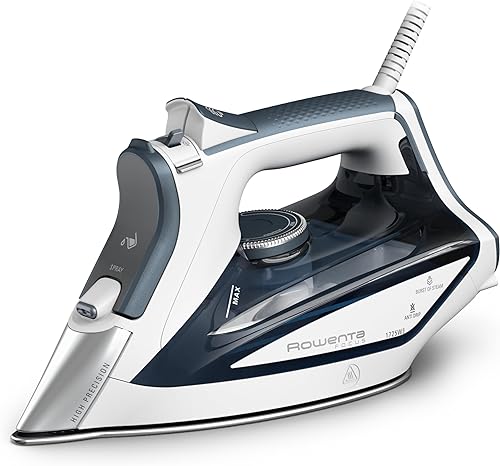
Best for: Frequent ironers who work with thick fabrics and want strong steam.
This iron lists a steam boost of up to 135 g/minute and a continuous output of up to 35 g/min. Its soleplate has over 400 active holes, which spreads steam more evenly across a garment. That kind of output matters most on heavy cotton or linen, where it can cut down on passes, though it also means more water to refill.
It has variable steam settings, so you can match the output to silk, wool or synthetics instead of running it at full strength. The listing also includes a self-cleaning function and an anti-calc system, which help keep the inside of the iron clear. Compared with the BLACK+DECKER pick, this one asks for more attention to settings but gives you more power when you need it.
It isn’t the right pick for someone who wants the simplest possible iron, since the controls and steam levels take a little learning.
Pros:
- Steam boost up to 135 g/minute
- Over 400 soleplate holes for even steam
- Variable steam settings for different fabrics
Cons:
- Settings take some learning for beginners
2. Rowenta, Iron, Smart Temp Stainless Steel Soleplate Steam Iron
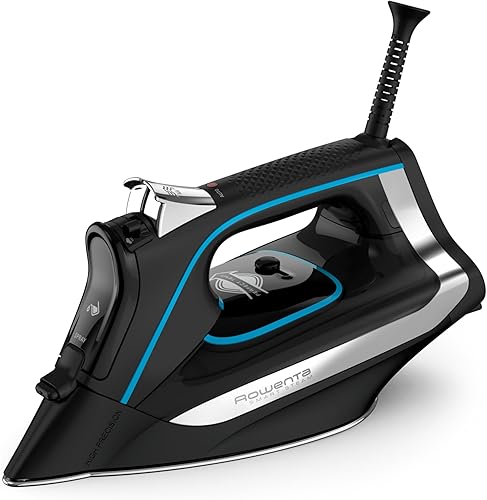
Best for: People who handle delicate fabrics and want the iron to manage heat for them.
The main feature here is automatic temperature regulation, which the listing says protects delicate fabrics from scorching. It pairs that with 1725 watts of power and a stainless steel soleplate with over 380 steam holes. For someone who worries about burning a favorite blouse, this removes much of the guesswork.
The listing also includes an automatic shutoff, so the iron turns off if you forget it. Its lightweight design is meant to make longer sessions easier on the wrist. Compared with the Focus Excel, it gives up a little steam volume in exchange for simpler heat handling.
Those who iron heavy items most days may find the output lower than the top pick.
Pros:
- Automatic temperature regulation for delicate fabrics
- Over 380 evenly spaced steam holes
- Automatic shutoff for safety
Cons:
- Lower steam volume than the top pick
3. PurSteam SteamBurst+ Steam Iron

Best for: Anyone who wants the iron to look after its own cleaning and safety.
This iron heats in about 30 seconds, according to its listing, and has a ceramic soleplate with axial holes that direct steam. It offers three preset fabric modes, from low for synthetics to high for cotton and linen. A burst function adds creases or removes stubborn wrinkles.
Its three-way auto shutoff triggers after 30 seconds horizontally, 8 minutes vertically and 30 seconds when tipped sideways. The listing also describes vertical steaming for drapes and hanging clothes, plus a self-cleaning feature. Against the BLACK+DECKER pick, it offers more presets and vertical use, but its single fabric mode per setting leaves less room for custom tuning.
It’s less suited to anyone who wants precise, manual control over temperature.
Pros:
- Heats in about 30 seconds
- Three-way auto shutoff timers
- Vertical steaming for hanging clothes
Cons:
- Fewer manual controls than some picks
4. BLACK+DECKER Allure Professional Steam Iron

Best for: Someone who wants a straightforward iron with clear controls.
The listing says this iron produces 30% more steam than certain competing models, and it includes an Auto Clean system that flushes out mineral deposits. Temperature and steam can be adjusted separately, which is useful when you iron mixed loads in one session.
The key to using these controls well is to match them to the fabric label rather than guessing. Set the temperature first, then adjust the steam to suit the fabric. Allow a few seconds after changing the temperature for the new setting to take effect before you start pressing, otherwise you may think the dial did nothing.
Fully preheat the iron before you begin, and use clean tap water. The steam output is listed as the iron’s main strength, and the listing ties good performance to both of these habits.
The soleplate is stainless steel and the listing advises avoiding zippers and buttons to keep the glide smooth. Iron around them, not over them, and wipe the soleplate clean after each session so residue doesn’t build up.
Automatic shutoff triggers after 30 seconds on its side or soleplate and after 8 minutes on the heel. If the iron suddenly stops heating, it may simply be in shutoff mode. Pick it up and reposition it to reactivate it rather than assuming it has failed.
Compared with the PurSteam, it has fewer preset modes but a more direct control layout.
Users with very hard water should expect to run the auto clean function regularly, as the listing recommends.
Pros:
- Separate temperature and steam controls
- Auto Clean system flushes mineral deposits
- Automatic shutoff on side and heel
Cons:
- Hard water calls for regular cleaning
5. CHI Steam Professional Iron
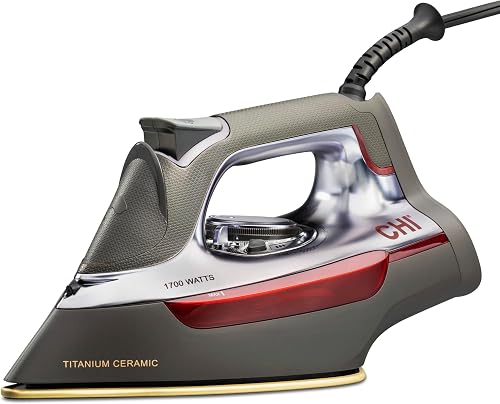
Best for: Those who iron hanging garments and want vertical steam for refreshing them.
This iron uses a titanium-infused ceramic soleplate and a 1700-watt heating element, according to the listing. It has over 300 steam holes and anti-drip technology. The vertical steam burst is aimed at suits, drapes and delicate hanging items that you want to freshen without pressing.
A temperature dial matches heat to fabric type, and an adjustable steam lever runs from no steam to full power. The cord is 10 feet long, which the listing presents as useful for placing the iron where outlets aren’t close. Compared with the Rowenta Focus Excel, it offers vertical steam but a lower stated maximum steam boost.
It’s a good fit for mostly hanging-garment use rather than heavy pressing.
Pros:
- Vertical steam burst for hanging garments
- Ceramic soleplate with over 300 steam holes
- 10-foot cord for reach
Cons:
- Lower stated steam boost than the top pick
Smart Temperature Control
Smart temperature control means the iron adjusts heat to suit the fabric you have selected, rather than leaving every choice to you. The Rowenta Smart Temp is built around this idea, and its listing describes automatic temperature regulation meant to safeguard all your fabrics, including the most delicate ones. That matters most when a single session covers cotton shirts, silk blouses and polyester trousers, because you don’t have to stop and reset the dial between each item.
The BLACK+DECKER and CHI picks let you set temperature by hand. Their listings describe variable temperature controls, and the BLACK+DECKER asks you to adjust per the fabric label and allow a few seconds for changes to take effect. Manual control suits people who already know their fabrics well and are comfortable reading care labels, since you choose the setting yourself.
Automatic control suits anyone who irons a mixed pile and wants fewer decisions. Manual control suits anyone who likes to set the heat deliberately, or who wants to hold a single setting for a long run of similar garments. If you mostly iron one fabric type, the difference may matter less than it sounds.
Self-Cleaning and Upkeep
Hard water leaves mineral deposits inside a steam iron, and those deposits can block steam holes. Several listings here describe a self-cleaning or auto-clean function that flushes these out. Running it regularly, and using clean tap water as the listings recommend, is the simplest way to keep steam output consistent.
The reason this matters is that a blocked hole doesn’t fail all at once. Steam begins to come out unevenly, so one patch of a shirt gets a burst while the area beside it stays flat. Catching that drift early, with a flush every so often, is much easier than trying to fix a steam pattern that has already gone wrong.
The listings treat the self-clean feature as a routine habit rather than a rescue step. The BLACK+DECKER Allure Professional, for example, says regular use is recommended to help keep steam flow steady and reduce buildup from hard water. In practice, that means flushing on a schedule you can remember, such as after a big ironing session, instead of waiting until you notice spitting or weak steam.
Water quality is the other half of the picture. If your tap water is soft, mineral buildup will be slower, and the flush will need to run less often. If you live where water is hard, the flush becomes more important, and it helps to fill the tank with fresh tap water each time rather than topping off old water that has been sitting. Distilled water isn’t what these listings recommend, so stick with clean tap water unless the manual for your specific model says otherwise.
Vertical Steam
Vertical steaming means holding the iron upright and directing a burst of steam at a garment that’s still on its hanger or on a rail. Heat and moisture loosen the fibers, and as the fabric relaxes, the wrinkles that formed while it hung in a closet tend to fall out. This works well for things that wrinkle from sitting or moving around rather than from being creased into a fold. Drapes and curtains are a good example, since they’re too large to lay flat on a board, and the PurSteam SteamBurst+ lists them directly. Suit jackets and dresses hung on a door or a rod are similar. The CHI Steam Professional describes the same use, refreshing hanging suits, drapes and delicates, so both irons are built around it.
Vertical steaming is also the easiest way to handle delicate pieces you would rather not press at all. Because the iron never touches the fabric, there’s no soleplate pressure and no risk of shine from direct contact with a hot surface. Keep the iron moving and hold it a short distance from the garment so the steam, not the metal, does the work.
The limit is that a steam burst relaxes wrinkles but doesn’t set a sharp edge. A deep crease in trousers, a pleat, or the fold line on a shirt sleeve will usually need the iron pressed flat with steam and pressure. For those, switch to horizontal ironing. Use vertical steaming for the overall look of a hanging piece, and flat pressing for anything that needs a defined line.
Frequently Asked Questions
Do I need a steam iron with a self-cleaning function?
If your tap water is hard, a self-cleaning function helps keep steam holes from clogging. The PurSteam SteamBurst+ and BLACK+DECKER Allure Professional both list one. Even without it, you can clean the iron by hand, but a built-in function makes routine upkeep easier and keeps steam output steadier.
Which steam iron is best for delicate fabrics?
The Rowenta Smart Temp is designed around automatic heat control, which the listing says protects delicate fabrics. The PurSteam SteamBurst+ also offers a low preset for synthetics and viscose. For silk or wool, check that the iron lets you reduce steam, since high output can mark some delicate fibers.
Is a higher steam output always better?
Not always. High output helps with thick cotton and linen, but it can soak lighter fabrics and leave them damp. The Rowenta Focus Excel gives strong output with variable settings, so you can turn it down. Pick a model that lets you match steam to the fabric you iron most.
How do I keep the soleplate gliding smoothly?
The BLACK+DECKER listing advises avoiding ironing over zippers and buttons, and wiping the soleplate clean after each use. Keeping the iron on a stable surface and using the correct temperature for each fabric also reduces sticking and scorching. Regular cleaning, as the listings recommend, supports a smoother glide.
Also Worth Considering
BEAUTURAL Iron Digital LCD Screen is worth a look if you like seeing temperature on a display. It’s rated at 1800 watts and includes a three-way auto shutoff, which makes it a practical choice for those who want clear readouts. The listing gives no further feature details, so the display and shutoff are the only things we can confirm from the specifications.
Martisan Steam Iron lists a 1800-watt heater, a nano ceramic soleplate, a 460 ml tank and a self-clean function. It’s a sensible option for anyone who wants a larger water reservoir for longer sessions. Its listing also mentions a precise thermostat, dynamic steam burst, fast heating and anti-drip protection, though the listing gives no detail on how these work in practice.
Rowenta 2in1 Pure Force Steamer combines vertical steaming and horizontal ironing in one unit, with 1875 watts of power and an XL tank. It suits those who want one device for hanging garments and flat pressing. Its tank holds 7.1 ounces, and its listing names auto-off as a safety feature.
Conclusion
Choosing a steam iron gets easier once you know what matters most to you, so take a minute to compare the listings side by side. Look at the water tank size, the heat settings, and the return policy before you click buy. If one model fits your ironing habits and budget, you’ll likely be happy with it for years.