There’s no single best upholstery cleaner for a microfiber couch. There’s a best one for a certain kind of buyer, with a certain kind of stain and a certain way of working. Microfiber is a tricky fabric. It hates scrubbing and it hates too much water. So the real question is how you plan to clean your couch, and how bad the mess is. Those two things decide most of the choice. The products below differ on foam style, on whether they’re made for suede-like fabric, and on how much foam they throw. They’re not really ranked against each other.
The two picks that stand apart are the Upholstery Dry Cleaning Foam and The Pink Stuff Miracle Foaming. One is built for everyday stains. The other handles heavier soil and leaves a fresher smell.
| # | Product | Best for | |
|---|---|---|---|
| 1 | Upholstery Dry Cleaning Foam | Top Pick | Check Price |
| 2 | The Pink Stuff Miracle Foaming | Best for Heavy Spills | Check Price |
| 3 | Fuller Brush Upholstery Cleaner | Also Great | Check Price |
| 4 | Pinnacle Black Label Suede-Soft | Best for Suede | Check Price |
| 5 | MPD PRO Heavy Foam Upholstery | Best for Stain Barrier | Check Price |
Quick Navigation
Pick By Your Situation
Start with how you’ll really use the product, because that decides whether a foam can, a spray can, or a concentrate makes sense. If you only need to deal with the occasional spill, a ready-to-use foam from the list above is the simplest choice: you spray, let it work, and wipe. Those foams are built for one-step treatment of stains on sofas, chairs and car seats.
If your fabric is suede, microfiber-suede or Alcantara, the choice narrows. The Pinnacle Black Label Suede-Soft cleaner is made for those delicate surfaces, and its label says to spray it onto a clean microfiber towel rather than directly onto the fabric. That matters for a material that can be damaged by too much moisture or rough handling.
If you have pets or small children, look for the product whose listing says what it is safe for. The NOYATECH listing is the only one that uses the words “pet safe,” though its listing gives no other details, so check the label before you buy.
1. Upholstery Dry Cleaning Foam

Best for: Someone who wants quick, everyday stain treatment on a family couch.
A microfiber couch picks up the usual stuff: soda, coffee, wine, kitchen grease. This foam is aimed at exactly those stains. The listing says you apply it to the surface, and stubborn spots can be worked with a secondary tool. It also says you don’t need steam or water washing. That matters, because too much moisture is what leaves rings on microfiber.
Think of the routine as spot treatment, not a full clean. Apply the foam to the stain itself rather than the whole cushion, then work it in with the secondary tool, which the listing suggests for the tougher marks. Because the foam is meant to break down stains that have already set, a fresh spill is still worth blotting first with a dry cloth so the stain doesn’t spread before you treat it.
The listing claims the formula is free of irritants and says it suits sofas and furniture. It also says regular use keeps deep dirt from building up. It doesn’t say much about how the foam performs on suede-style microfiber specifically. So test it on a hidden spot first.
Good if: You want a foam you can use on spills as they happen.
Good if: You’d rather skip steam or water-based cleaning.
Good if: You have kids or pets and want a no-rinse option.
Skip it if: You need a product made specifically for suede-like microfiber.
2. The Pink Stuff Miracle Foaming Carpet & Upholstery Stain Remover
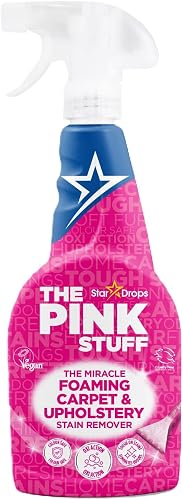
Best for: A household that deals with heavy spills and wants a fresh smell afterward.
This one’s built around a stronger stain-lifting claim. The listing says the Oxi action works down inside the fibers, which is what you want when a spill has soaked in rather than sitting on the surface. It’s a different job from a light surface wipe, and that’s where this product is aimed.
The tradeoff is that the listing talks a lot about carpet and upholstery in general. It doesn’t say anything specific about microfiber, and that’s a gap worth noticing if your couch is a delicate fabric. Microfiber is known for being easily damaged by harsh treatment, so the fabric’s sensitivity matters more here than the product’s marketing.
Start with the care tag. Many couches list a recommended cleaning code, and some specifically rule out certain cleaners. If the tag points you toward water-based or solvent-based cleaning, pay attention to that before reaching for anything else.
Then test a small corner. Pick a spot that’s hidden, like the back of a cushion or the underside of an arm. Apply a little foam, let it sit for the time the label suggests, and blot it with a clean white cloth. Check for color transfer on the cloth, any darkening or lightening of the fabric, and any stiffness or roughness once it dries. If the test spot looks fine after it’s fully dry, you have a reasonable sign the product is safe for the rest of the couch.
Good if: You’re dealing with spills that have already dried in.
Good if: Smell matters as much as the stain itself.
Good if: You want a color-safe option.
Skip it if: Your couch has a care tag that warns against oxidizing cleaners.
3. Fuller Brush Upholstery Cleaner

Best for: A buyer who wants a foaming spray with a backup can already in the box.
The package includes two cans, which is handy if one bottle won’t get you through the year. The listing calls it a one-step cleaner, so there’s no separate pre-treatment or rinse to buy. It also says the foam lifts stubborn stains from fabric and vinyl, and that it leaves no sticky residue. That last point matters more than it sounds. Leftover cleaner film is what makes fabric pick up dirt faster after a few rounds, so a cleaner that rinses clean is a real advantage for a surface you touch every day.
Because it’s listed for both fabric and vinyl, it suits a household with more than one soft surface. A couch, a set of dining chairs and the car seats can all come from one product instead of three.
The listing doesn’t say how it handles deep, set-in stains, and it doesn’t give a specific dwell time or process for them. So treat it as the tool for regular upkeep and light-to-moderate spots. For a fresh mess, blot it promptly rather than waiting for it to dry into the fibers.
Good if: You like having a spare on hand.
Good if: You clean more than just the couch, like car seats or chairs.
Good if: You want no sticky film left behind.
Skip it if: You’re looking for a heavy-duty product for old, set-in stains.
4. Pinnacle Black Label Suede-Soft Alcantara Cleaner

Best for: Owners of suede, micro-suede or Alcantara upholstery who want a product built for that fabric.
This is the specialist here. It claims to remove light staining and to neutralize odor-causing bacteria instead of masking smells.
The application method is different from a spray-and-scrub. The listing says to spray a clean microfiber towel, never the surface, then wipe in all four directions. It also says to test an inconspicuous area first. The listing says it’s for light staining, so heavy stains will likely need repeat passes.
Good if: Your couch is real suede or a suede-like microfiber.
Good if: You want a product built for that fabric’s nap and texture.
Good if: You like controlled, towel-applied cleaning.
Skip it if: You have a standard woven microfiber and don’t need a specialist product.
5. MPD PRO Heavy Foam Upholstery Cleaner with Stain Guard 22

Best for: Someone who wants thick foam coverage and a stain barrier on a bigger job.
The listing describes a foam that lifts tough stains, dirt and grime from upholstery, fabric and carpets. The foam is meant to be applied precisely, so you can work on one spot at a time instead of soaking the whole cushion. That matters on a couch, where a broad spray can leave a damp patch that takes longer to dry than the stain took to set.
The stain guard is the part that sets this product apart from a plain cleaner. According to the listing, it creates a barrier that stops spills from soaking into the fibers. That barrier is most useful after you’ve cleaned a surface, because a clean fabric is the one you want to protect. On a light-colored couch that gets a lot of traffic, a coffee or juice spill that beads up and wipes off is a far better outcome than one that has to be scrubbed out of the weave.
The listing describes the product as gentle yet effective on both synthetic and natural fibers, including couches and car seats. It doesn’t say how it performs on any particular material, though, and it doesn’t name a microfiber test. Test a small hidden patch, such as the underside of a cushion or the back of the couch, let it dry, and look for any change in color, texture or stiffness before you treat the visible areas.
The 22 oz aerosol can covers a fair amount of couch, but a large sectional with several cushions may need more than one can. Work through one section at a time and check how much is left before you start the next. If you’re cleaning a whole room of upholstery and carpet, plan for the can to run out sooner than you expect.
Good if: You want a stain-guard layer on top of cleaning.
Good if: You need broad foam coverage for a large couch.
Good if: You like targeted, mess-free application.
Skip it if: You want a product made for suede or Alcantara.
Also Worth Considering
Dr. Beckmann Upholstery comes with an applicator brush and a 400 ml bottle. An applicator brush is included, which gives you a tool for working a spot. It’s a sensible option if you already like using a tool with your cleaner, and if you tend to scrub hard, the brush gives you a more controlled way to do it.
The listing gives no further feature details for this one, so check the label on the bottle before you buy if a specific claim matters to you.
NOYATECH Couch Cleaner lists itself as pet safe, and its 32 oz size gives you plenty to work with. If pets share your couch, that’s the main thing to look at. Pet safety is the claim that should decide this one for you, since it’s the only detail the listing offers. Keep the bottle out of reach while you use it and let the surface dry fully before the animals get back on it.
HOWARD Products Upholstery Cleaner covers couches, chairs, rugs and carpet in one bottle. It’s a fair pick if you’re cleaning several fabric surfaces and want to buy a single product for all of them. The listing doesn’t call out microfiber specifically, though, so if your main concern is your couch, a product that names microfiber directly will tell you more about what it’s designed for.
Where These Overlap
Several of these are close. The Upholstery Dry Cleaning Foam, Fuller Brush and MPD PRO all do everyday foaming cleaning, and their listings promise much the same thing: lifting stains and dirt without leaving a sticky residue. Because the results on paper look so alike, the decision among those three usually comes down to practical details rather than performance claims. Size matters first. Fuller Brush is sold as a two-can pack at 22 oz each, so if you expect to clean a lot of furniture or a car interior, that’s more product on hand, while the other two may suit a single household cleanup better. Whether you want a spare can is the second question. A pack of two means you won’t run out partway through a job.
The third factor is how much protection you want after cleaning. MPD PRO is the one that advertises a stain guard, a barrier meant to keep spills from soaking into the fibers and keep surfaces cleaner for longer. If you’re cleaning a couch that gets regular spills, that feature is the reason to pick it. If you only need a one-time refresh, the guard matters less.
The Pink Stuff sits a bit apart because it leans hard on odor and deep-set stains. Its listing stresses removing smells along with stains and handling heavy soiling, so it’s the one to consider when the problem is more about a lingering smell or a stubborn, deeply embedded mark than a surface spill. For a quick, routine clean, the three foaming cleaners above are the more natural fit.
Pinnacle is the clear odd one out. It’s a specialist for suede and Alcantara, and the others aren’t built for that. Its listing calls for a concentrated product used sparingly, applied to a clean microfiber towel rather than directly onto the surface, and it warns you to test an inconspicuous area first. If your couch is standard microfiber, Pinnacle is probably the wrong tool. If it’s suede-like, it’s probably the only one here made for that fabric.
Still Not Sure?
How often will you really clean it?
If you clean once in a while, you want something that handles a spill when it happens and doesn’t need much setup. The Upholstery Dry Cleaning Foam is built for that kind of quick, no-rinse use. If you clean often, a spare can like the Fuller Brush pack makes more sense, so you’re not running out mid-job.
What fabric is it, exactly?
Check the tag before you buy anything. A standard woven microfiber is different from suede or Alcantara. If you have real suede-like upholstery, the Pinnacle Black Label Suede-Soft is the one made for that nap and texture. For ordinary microfiber, any of the foaming cleaners will work, so test a hidden spot first.
What would you regret most?
Most people regret buying a product that’s too harsh for their couch. Test any cleaner on a hidden corner first, whatever you pick. If you’re worried about odor and set-in spills, The Pink Stuff is the one to look at. If you just want a gentle everyday option, start with the Upholstery Dry Cleaning Foam.
Frequently Asked Questions
Can you use a foaming cleaner on microfiber couches?
Most of the foaming cleaners here say they work on upholstery, so they’re a reasonable choice for microfiber. The safest approach is to test a small hidden spot first. The Pinnacle product is the exception, since it’s made for suede-like fabrics and not standard woven microfiber.
Do I need to rinse the cleaner off after use?
Several of these say they’re no-rinse. The Upholstery Dry Cleaning Foam and the Fuller Brush cleaner both describe leaving no residue. Still, check the label for each product, since directions vary. For the Pinnacle product, the listing describes applying with a towel and wiping, not rinsing.
What’s the difference between a foam and a spray cleaner?
Foam stays on the surface longer, which helps it work into a stain without soaking the fabric. Spray can soak in more. Foam tends to suit microfiber better, because too much moisture is what leaves water rings. The MPD PRO and Fuller Brush both use a foam format.
Which one works best on pet stains?
The NOYATECH Couch Cleaner describes itself as pet safe, which makes it a sensible place to start if pets share your couch. Always test first, and check the label for the exact directions.
Conclusion
For background on how upholstery fabrics are labeled and cared for, the American Cleaning Institute publishes guidance on cleaning products and fabric care at American Cleaning Institute’s cleaning guidance.